
Document integrity
Fake diplomas, duplicate titles
Official documents can still be forged, and verification relies on weeks of letters between agencies. Disputes over duplicate land titles make the news again and again.

Why NusaChain, the people's blockchain behind the NUX asset, deserves a place in Indonesian government as a digital trust layer. Not as a replacement for the Rupiah, but as a public ledger nobody can quietly alter.
Every year, government agencies spend budget on new information systems. Many are good. But almost all share the same weakness: anyone with administrator access can change data without leaving a trace.
That problem was actually solved in 2009. An anonymous figure called Satoshi Nakamoto released a record-keeping system that no one owns, no one can erase and everyone can inspect. It's called a blockchain. For more than 17 years it has been attacked, tested and criticized by hackers, academics and regulators worldwide, and it keeps running.
NusaChain doesn't reinvent that wheel. It adopts the Bitcoin Core codebase directly: the UTXO model, Proof of Work consensus and SegWit active from the first block. On top sits the X11 algorithm, used by other crypto networks since 2014, all wrapped in an Indonesian identity.
The birth of a tamper-proof public ledger. This architecture is NusaChain's backbone.
A chain of 11 cryptographic hash functions used by public networks for over a decade. NusaChain uses the same algorithm.
Georgia became an early pioneer, anchoring fingerprints (hashes) of land titles to a public blockchain.
The generation of Bitcoin Core code that, according to the NusaCoin whitepaper, forms NusaChain's foundation. The work of hundreds of contributors.
Genesis block on 1 December 2025. 18 million NUX supply, a block every ~6 minutes, halving every 300,000 blocks. Every coin must be mined, including by the founders.
Transactions signed offline can travel over a mesh network or sound waves, then get broadcast once any device reaches the internet.
These problems aren't due to a lack of good intentions. They come from how data is stored: centrally, editable, and hard for the public to verify.
Official documents can still be forged, and verification relies on weeks of letters between agencies. Disputes over duplicate land titles make the news again and again.

Hundreds of trillions of rupiah flow through long chains. The people the money is meant for often have no simple way to check where it actually went.
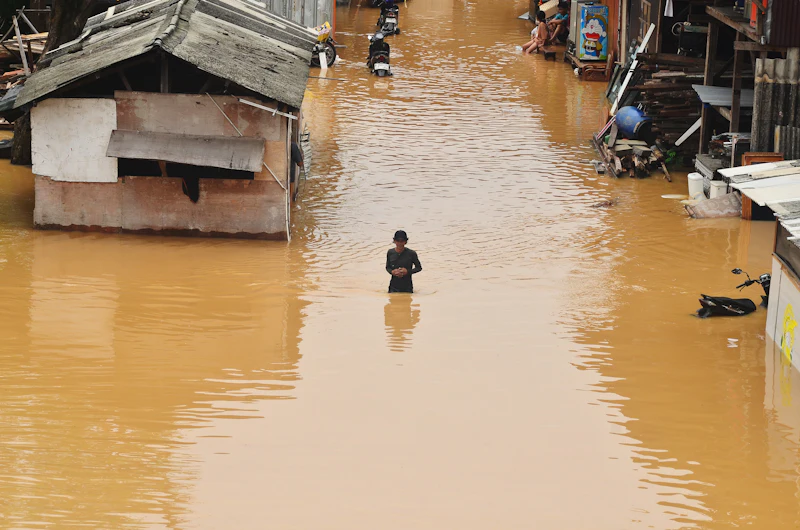
Indonesia faces thousands of disaster events every year, and many remote villages still have weak signal. When networks go down, payments and records go down with them.
Many government systems depend on paid licenses and closed code. When the contract ends or the vendor leaves, data and control are held hostage.
NusaChain doesn't replace government apps. It works behind them as a digital notary that can't be bribed, never sleeps, and keeps records anyone can check.
Documents stay on the agency's servers. Only their fingerprint, a 32-byte SHA-256 hash, is written to NusaChain. Change a single letter and the fingerprint no longer matches.
Multi-signature lets a wallet release funds only with approval from several parties. For example 2 of 3: the village head, the treasurer and a village council member. No single person can withdraw alone.
The UTXO model allows transactions to be signed on a device offline. With GEMA Taobot they pass from phone to phone over a mesh network or sound waves. Once one device finds a signal, the transaction is broadcast.
Every NusaChain address is visible to anyone via the explorer. For disaster appeals, CSR programs or grants, transparency no longer waits for a year-end PDF. The flow of funds can be seen at any time.

"Public trust is built on records that citizens can check for themselves, from the market to the village office."The principle behind NusaChain
This is the principle behind document notarization. Type or edit the text below. Only the 64-character code on the right is recorded on NusaChain; the document itself never leaves your hands.
computing…
Many "government blockchain" projects worldwide actually use closed (permissioned) chains controlled by a handful of parties. The result looks more like an expensive database than a public ledger.
| Aspect | Central database | Consortium blockchain | NusaChain (public) |
|---|---|---|---|
| Who can change past records? | Admins, without a trace | Consortium members, if they agree | No one |
| Publicly verifiable? | No | Limited, needs permission | Yes, via the explorer |
| License cost | Often paid | Costly integration & vendors | Zero, MIT license |
| Auditable code | Depends on vendor | Partly | Fully open |
| Architecture track record | Decades | Typically < 10 years | Bitcoin-based, 17+ years |
| Works when the internet is down | No | No | Yes, via GEMA (mesh/sound) |
| Single point of failure | Yes (central server) | Few nodes | None; stronger with every new node |
| Storage per document | MB – GB | Varies | 32 bytes (hash only) |
Databases are still needed to store document content. NusaChain acts as a proof layer on top, so the two complement each other.
There are three reasons this technology rarely makes it into government meeting rooms. First, the word "crypto" instantly suggests speculation. Second, regulation has only recently matured. Third, few people explain it in the language of public policy.
Yet several countries have already moved, each with different approaches and results. The lesson is clear: what works is using blockchain as trust infrastructure, not as a currency bet.
Has used hash-chain technology to protect the integrity of public-service data, including health records, since the early 2010s.
Since 2016 has anchored fingerprints of land documents to a public blockchain to prevent title tampering.
Uses surplus hydropower to mine and hold crypto assets as part of national reserves.
Made Bitcoin legal tender in 2021, then relaxed that in 2025. The takeaway: start with infrastructure, not currency.
Law No. 7 of 2011 establishes the Rupiah as Indonesia's only legal tender, and that doesn't need to change. Since January 2025, crypto assets have been supervised by the OJK. This proposal keeps NusaChain on the safest path: as record-keeping and proof infrastructure, in line with Indonesia's e-government (SPBE) and One Data initiatives.
Adoption doesn't need to start with a big decision. The NusaCoin whitepaper's own roadmap already includes pilot projects in finance and government. Here are the proposed steps.
One agency or state university anchors hashes of diplomas or decrees on NusaChain. No existing system needs replacing.
A few villages record fund spending with multi-signature wallets and an explorer dashboard residents can open.
Field-test GEMA offline transactions with regional disaster agencies in high-risk areas, tied into relief logistics.
Local governments and universities run NusaChain nodes. The more institutions secure the network, the stronger and more sovereign it becomes.
The first agency to adopt it isn't taking a big risk. It's setting a new standard for how a state safeguards its people's trust.